
Handmade objects carry stories in their grain, patina, and imperfections. Turning that tactile experience into an image that moves a shopper to click “buy” is both an art and a system. Great product photography for artisans doesn’t just showcase an item; it honors process, communicates value, and builds trust at a glance. Whether you craft fine jewellery, small-batch accessories, watches, ceramics, or custom leatherwork, the right images can lift your brand above a crowded marketplace, accelerate launches, and keep your creative time focused on making—not managing endless reshoots.
Today’s buyers expect studio-quality visuals everywhere: e-commerce listings, social media, and even print collateral. The good news is that modern, maker-friendly workflows make this practical. With a smart plan, consistent lighting, and scalable tools—ranging from compact physical setups to AI-powered virtual studios—artisans can deliver polished packshots, compelling lifestyle scenes, and on-model imagery without the cost and delay of traditional shoots. The result: faster releases, clearer storytelling, and a cohesive visual identity that turns browsers into loyal collectors.
Light, Texture, and Truth: Techniques That Honor the Handmade
For artisans, the camera’s first duty is truth. Textures, finishes, and construction details are the signatures of craft, so lighting and color management become non-negotiable. Start with a soft, wraparound light to reduce harsh shadows and bring out surface nuance. A simple setup—diffused key light, fill card, and a flag to control spill—creates dimensionality without glare. For reflective pieces like jewellery and watches, add a polarizing filter to tame specular highlights, and use larger light sources relative to the subject to produce luxurious gradients across metal and glass.
Color accuracy is essential when a buyer’s decision hinges on the exact hue of a gemstone, enamel, or leather dye. Calibrate your monitor, shoot a neutral reference (like an 18% gray card) at the start of each session, and establish a consistent white balance. This workflow keeps your gold warm, your sterling clean, and your stones true—across packshots, detail crops, and lifestyle scenes.
Scale is another pillar of trust. For rings, earrings, or small accessories, macro lenses reveal craftsmanship but can distort perception if not grounded in context. Balance macro close-ups with a “true-to-scale” frame—on a neutral background, on-model, or next to a simple reference object. Keep props minimal and honest: a linen cloth to signal softness, a marble slab for refined contrast, or a walnut board for warmth. The goal is to enhance, not distract.
Background choice should reflect your brand voice. Clean white or light gray remains an e-commerce staple; it isolates form and speeds marketplace approvals. For premium positioning, tonal backgrounds echo material stories: slate for modern minimalism, velvet for vintage romance, raw wood for artisanal authenticity. Maintain a consistent angle set—hero at 45°, front elevation, side profile, clasp or closure detail—for repeatable results across collections.
Finally, plan for platforms. Square crops for grid views, vertical frames for social, and high-resolution masters for zoom. Export a thumbnail that pops at small sizes (clear silhouette, punchy contrast) and a detailed main image that rewards closer inspection. When every frame supports both aesthetics and accuracy, images do the selling—and your craft gets the spotlight it deserves.
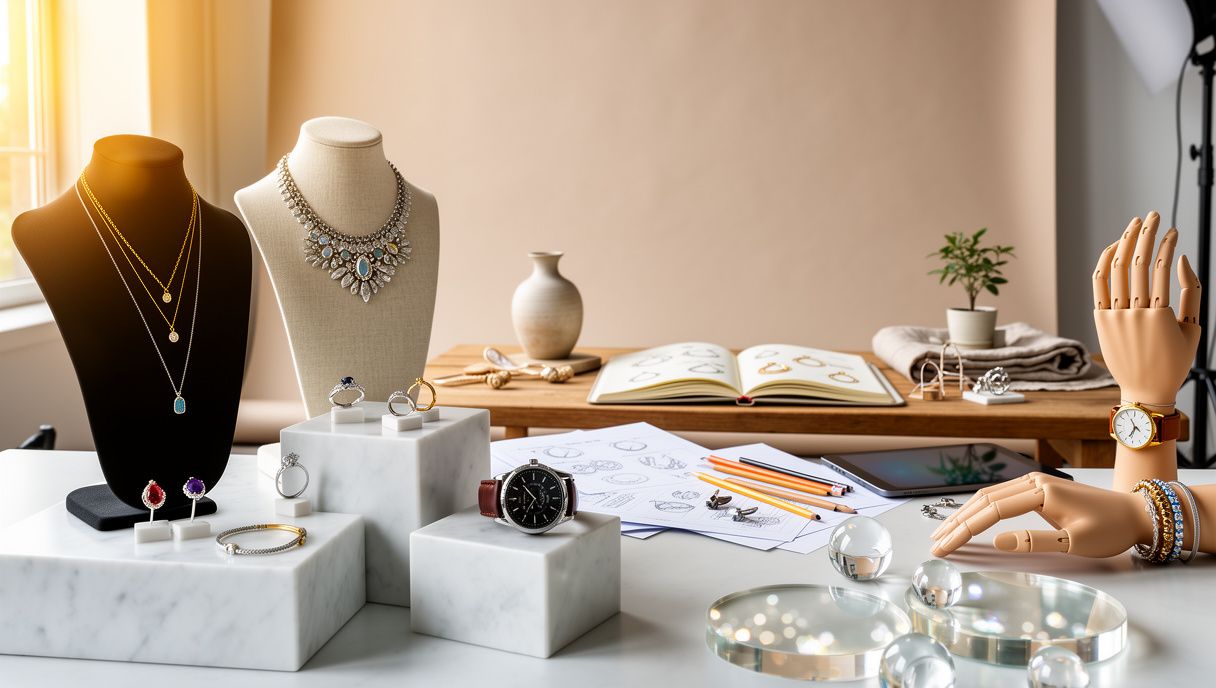
From Workbench to Web: A Lean Studio Workflow for Consistent Results
Successful product photography is a process you can repeat. Start with a shot list that reflects how customers shop: a hero image to create desire, orthographic views to answer questions, macro details to celebrate craft, and an in-context or on-model shot to convey scale. Assign each item a style code and maintain consistent angles, lens choice, and background across the collection. Consistency builds brand memory—critical for artisans releasing limited runs or seasonal drops.
Set up a compact studio that you can deploy quickly: a foldable light tent or diffusion scrim, continuous LED panels with adjustable temperature, a stable tripod, and a tethering solution for real-time review. Tethering helps you catch dust, fingerprints, or crooked props on the spot and lock in your lighting recipe for future sessions. Create a repeatable naming convention and folder structure (style, variant, angle), and track color references so you can reproduce results weeks later.
Retouching should aim for faithful polish. Remove dust, even out minor reflections, and correct color cast—but preserve the soul of natural materials. For jewellery and watches, pay attention to crystal glare, bezel reflections, and the cleanliness of prongs and settings. Export in multiple resolutions: lightweight images for web speed, and 2K or 4K masters for zoom, print, or retailer syndication. Proper compression and modern file formats maintain crisp edges on intricately detailed pieces without bloated load times.
For artisans working from sketches or CAD files, an AI-powered visual studio can collapse timelines. You can turn pre-production designs into realistic concept visuals, test finishes or colorways before fabrication, and pre-sell limited editions with confidence. Instead of booking multiple shoots for every variant, generate consistent packshots and lifestyle scenes, adjust backgrounds, shadows, and reflections, and output launch-ready sets. Leveraging a platform built around studio-quality outputs, batch editing, and smart background control helps small teams scale without sacrificing authenticity. If you need a modern, maker-friendly solution, explore Product photography for artisans—a streamlined path from idea to imagery for jewellery, watches, and high-end accessories.
To keep operations lean, embrace a “shoot once, use many” mindset. Capture enough angles and detail to serve your webshop, marketplaces, press kits, and social media. Store masters in a simple DAM folder tree. With a strong workflow, your studio becomes an extension of the bench: reliable, fast, and creatively liberating.
Packshots, Lifestyle, and On-Model: Turning Images into Sales Across Channels
Different frames do different jobs. Clean packshots win trust by removing ambiguity; lifestyle and on-model frames create desire by placing products in real life. For jewellery, a balanced gallery might include: a crisp hero on white, a macro to highlight stone setting or engraving, a clasp or caseback detail, a realistic on-skin shot for scale and elegance, and a lifestyle scene that conveys mood—morning light on a marble vanity, a workshop bench for maker authenticity, or a city street for modern minimalism.
On-model for rings, bracelets, and watches deserves special care. Inclusive skin tones, realistic proportions, and subtle posing communicate fit and feel. Hands and wrists should be naturally lit with gentle specular highlights; avoid heavy retouch that removes texture. For earrings and necklaces, show front and side angles to reveal drop length and movement. If live modeling isn’t feasible for every release, high-fidelity virtual sets and model imagery can extend your library—ensuring consistent lighting, precise scale, and rapid turnarounds between product drops.
Lifestyle imagery builds narrative. Choose locations and materials that echo product identity: concrete and steel for industrial watches, linen and ceramic for heritage-inspired jewellery, glossy lacquer for contemporary accessories. Keep props minimal and color-harmonized to avoid competing with the hero. Shadows should feel believable; soft cast shadows and grounded reflections add premium credibility, whether captured in-camera or generated digitally.
Prepare assets for every channel. E-commerce requires fast-loading, SEO-ready images: descriptive file names, alt text that mentions material and model, and sizes optimized for both mobile and desktop grids. Social media rewards variety: tight crops for detail stories, vertical formats for Reels, and carousel sets that move from hero to craft close-up. Print and lookbooks demand higher resolution with precise color profiles. Where allowed, short product clips or 360 turntables can further clarify finishes and engineering details, especially for watches or mechanical components.
Consider a real-world scenario: a small-batch goldsmith launching a limited ring collection. By rendering pre-production designs from CAD into lifelike visuals, they validate the palette, plan matching props, and open pre-orders while the first pieces are cast. With a single, consistent style guide, packshots and lifestyle images publish across the webshop, a boutique retailer, and seasonal press outreach—no reshoot required. When variants arrive, the same lighting schema and virtual backgrounds slot new items into the grid in hours, not weeks. The result is cohesive branding, faster cash flow, and customer confidence born from visual clarity.
Across all touchpoints, the principle is simple: images must shorten the distance between curiosity and conviction. When product photography is intentional—honoring texture, showing honest scale, and weaving a lifestyle story—artisans capture not just attention, but enduring loyalty. That’s how a handcrafted object becomes a must-have piece in someone’s cart, collection, and life.

A Sarajevo native now calling Copenhagen home, Luka has photographed civil-engineering megaprojects, reviewed indie horror games, and investigated Balkan folk medicine. Holder of a double master’s in Urban Planning and Linguistics, he collects subway tickets and speaks five Slavic languages—plus Danish for pastry ordering.